News
The Museum of Measurement. The SIAP+MICROS Historical Archive Takes Shape
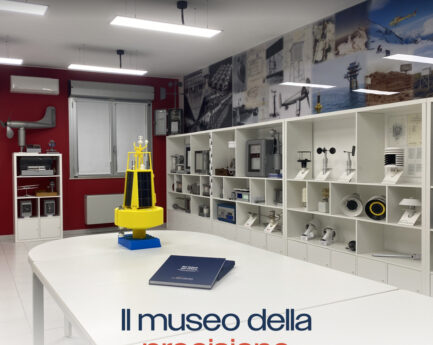
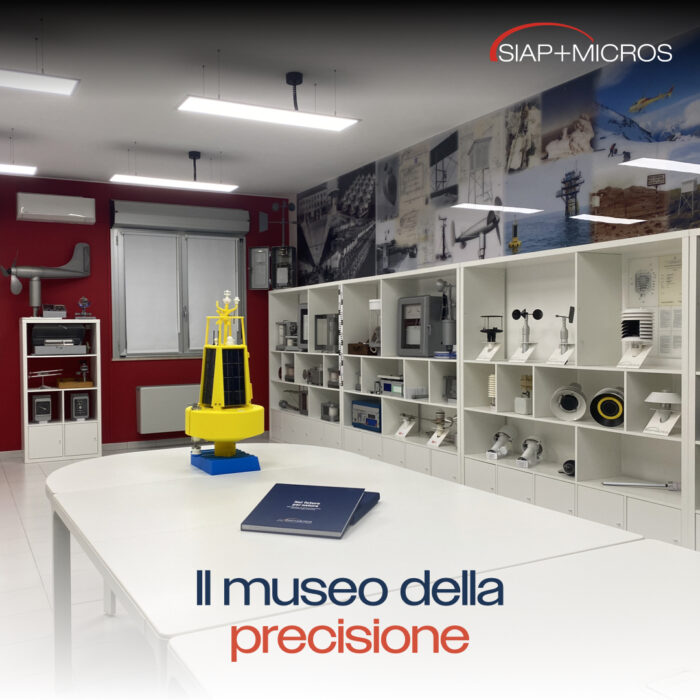
At its headquarters in San Fior (Treviso), SIAP+MICROS has created its historical archive— a space dedicated to the company’s technological heritage and to the history of environmental monitoring in Italy.
The exhibition traces over a century of activity and research through a selection of original documents, photographs, and instruments. Organized through freestanding displays and wall graphics, it features a structured wall divided into two sections: the upper band presents a sequence of photographic reproductions offering an at-a-glance overview of the company’s history; the lower section hosts a series of shelves displaying precision instruments designed and industrialized over the years.
Among the most significant reproductions are historical documents attesting to the company’s production quality just a few years after its founding (1925). Notable highlights include the tests carried out in Vigna di Valle in 1927 on a prototype aircraft meteorograph developed by technical assistant Pietro Marcovaldi for the Regia Aeronautica; the patents filed in 1937 by engineer Piero Gradenigo to improve flight safety and meteorological and aerological measurements; and photographs of the new SIAP+MICROS plant inaugurated in the same period in Bologna. Built in a rationalist style, the factory was designed to meet growing market demand and employed dozens of skilled workers. It remained active even during the difficult war years, suspending production only briefly after Italy’s liberation in 1945—further evidence of SIAP+MICROS’s strategic importance in supporting aviation and developing the national meteorological system.
The final section of the photographic display is dedicated to more recent decades, from the economic boom to international expansion. Images document SIAP+MICROS’s presence across Europe, as well as in Africa, Asia, and South America. These industrial missions took the company as far as Antarctica, with collaborations in China and the USSR—clear evidence of how technological quality can overcome not only environmental challenges but also the ideological boundaries imposed on people.
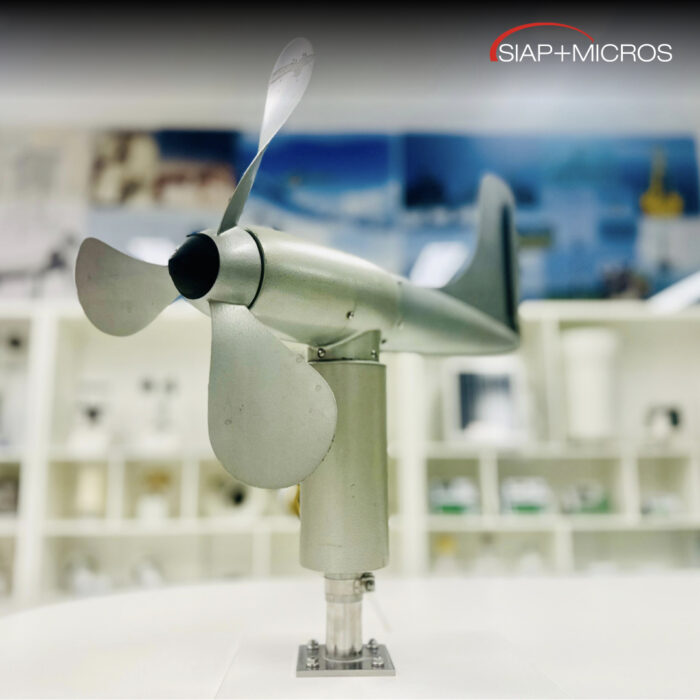
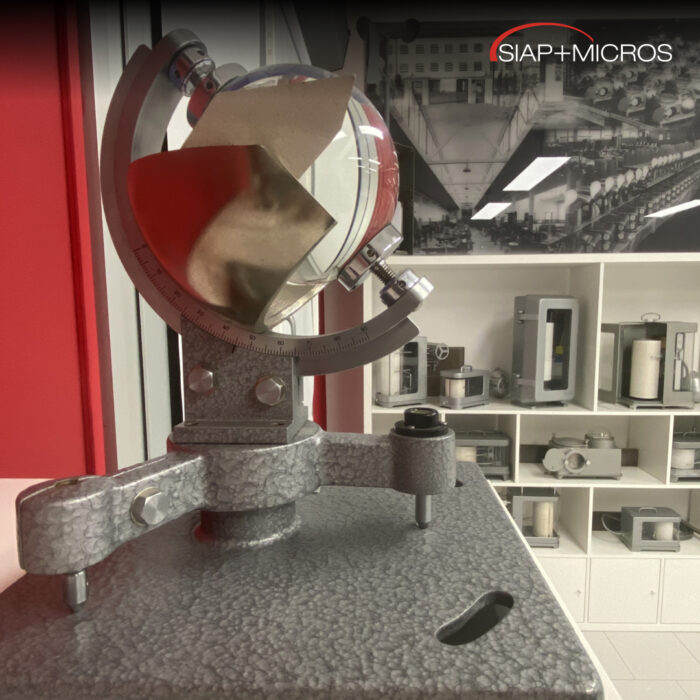
Among the historical instruments on display are several true gems of instrumental meteorology: the innovative handheld anemometer and the aircraft-shaped model known as the “Aeroplanino,” both featured in SIAP catalogues of the 1930s; the iconic Campbell-Stokes Heliophanograph; a pyranograph designed to withstand extreme atmospheric conditions; and a collection of thermometers, barometers, hygrographs, and thermo-hygrographs. Also on display are early electronic data acquisition terminals, forerunners of today’s digital dataloggers. The exhibition concludes with the latest-generation products: from meteo-hydrogeological sensors to the SmartCELLino solar radiation shield, from tide measurement solutions to integrated environmental monitoring platforms.
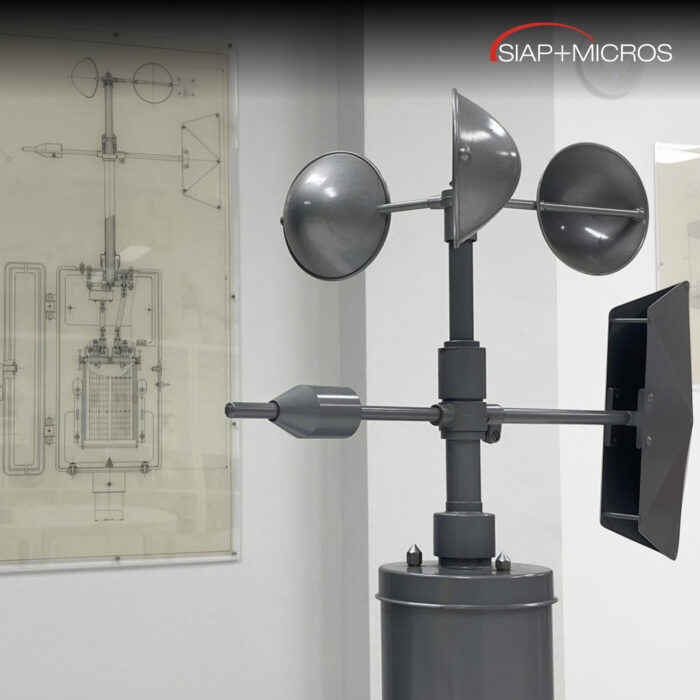
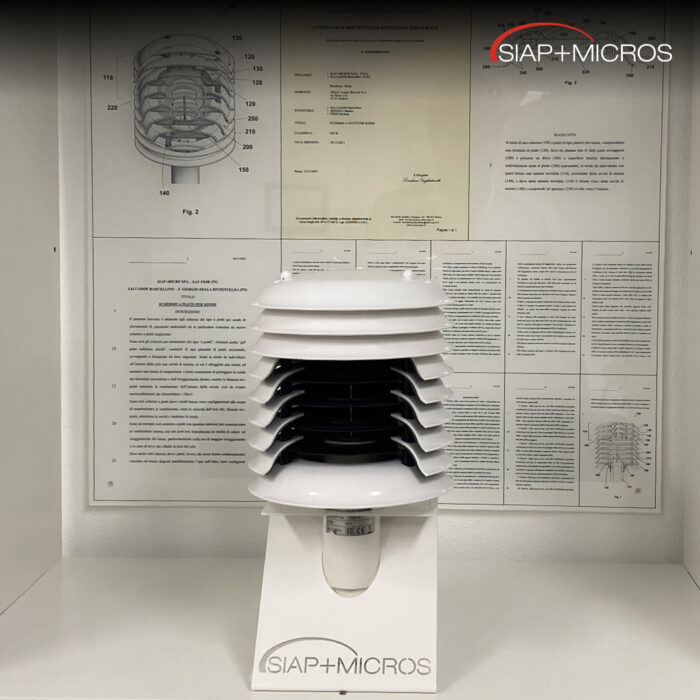
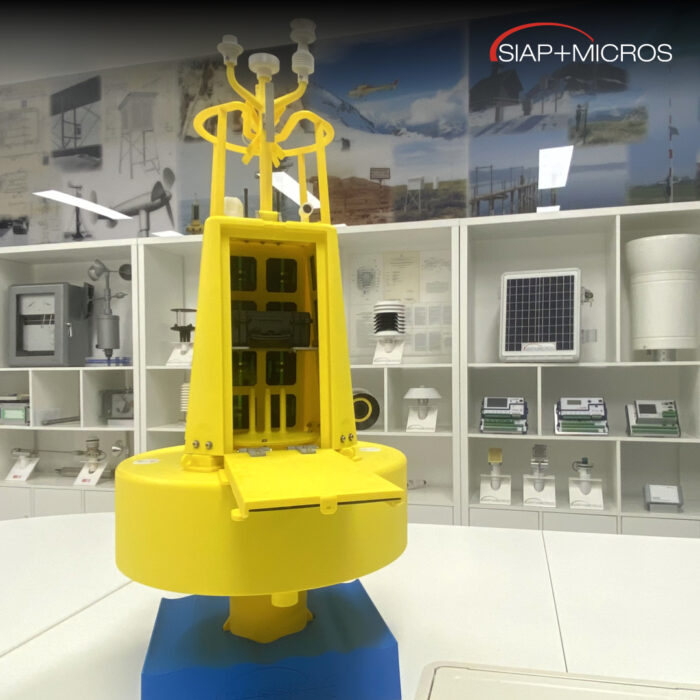
The archive offers a comprehensive view of SIAP+MICROS’s evolution: from the sale of precision instruments to in-house manufacturing, from early field experiments to patents, from mechanical engineering to digital technologies, up to today’s integrated monitoring systems.
The archival work has only just begun. Historical photographs, technical manuals, brochures, and correspondence form a much broader body of material, mainly spanning from the 1930s to the 1990s. Particularly noteworthy is the collection of technical drawings and design transparencies, all hand-made—often at a 1:1 scale. This is a heritage that continues to emerge and will increasingly contribute to telling the story of a century of innovation in environmental data measurement—a story to which SIAP+MICROS has made a decisive contribution.
The historical archive can be visited by appointment by emailing info@siapmicros.com.
Ultime notizie